DNAWomen's Health DNA5 health testsNABLNABL certified lab

Every 1 out of 5 Indian women has PCOS.
Most never learn why. But you can.

Five conditions that affect Indian women more than most people know, and all five have a strong link to your genes. A single saliva test tells you where you stand, before symptoms do.Check my risk
At-home saliva kit
No clinic visit
No needles
2-min collection
Results in 7 days
Delivered digitally
30-min counsellor chat
Free, on WhatsApp
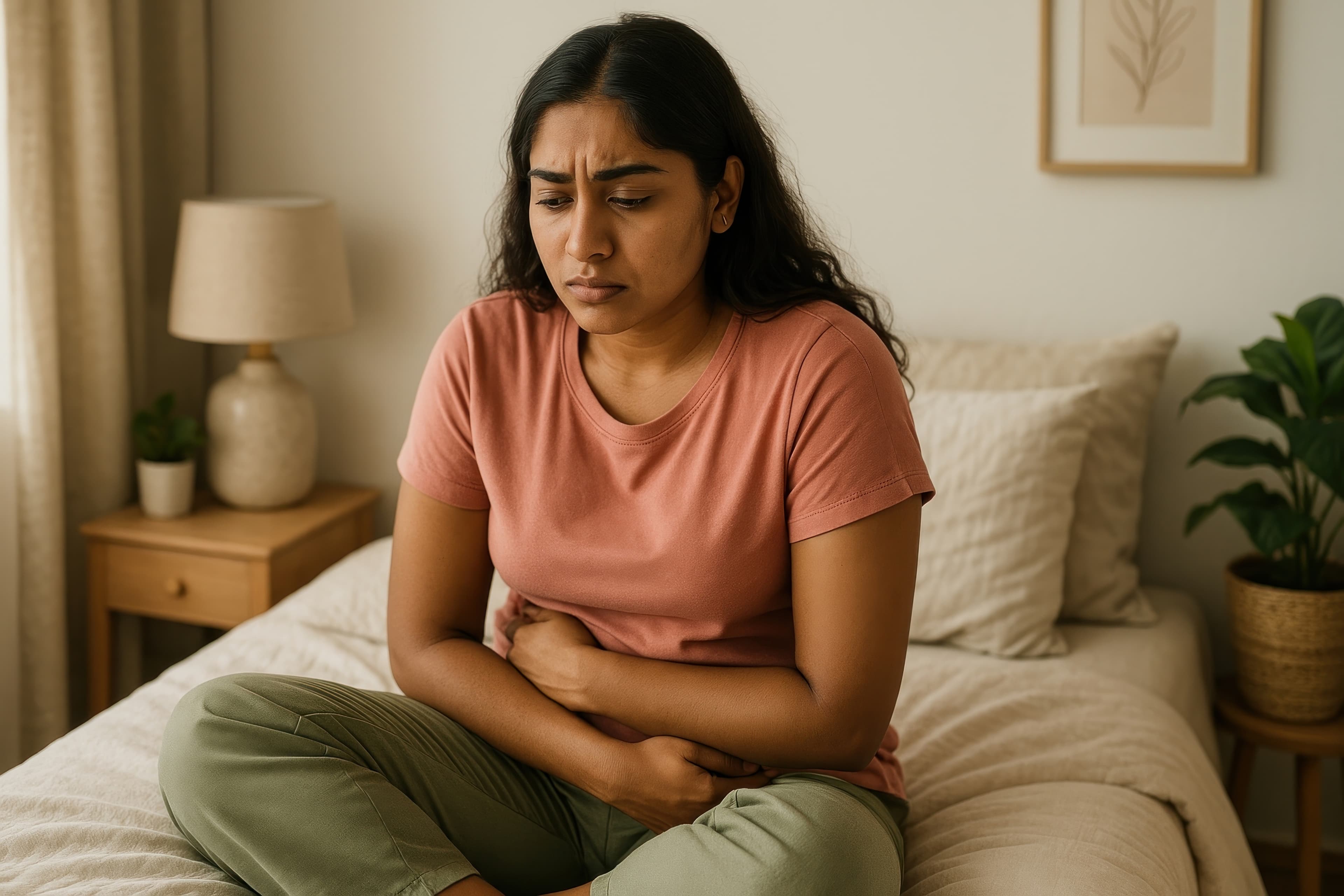
A composed woman Know your risk before symptoms do
5
Health tests
NABL
Certified lab
99%+
Accuracy
7 days
Results
What you'll discover

Five things most Indian women are never told about their own health.

PCOS · Gene THADA

Can genes cause irregular periods and PCOS?

Yes. PCOS, or Polycystic Ovary Syndrome, has a clear genetic link. It is one of the most common hormonal conditions in women of reproductive age, affecting up to 1 in 5 Indian women, yet most women spend years not understanding why their periods are irregular, why their weight keeps shifting, or why their skin keeps breaking out.

PCOS is not just a reproductive issue. Left unmanaged, it can increase the risk of type 2 diabetes, heart disease, and difficulty conceiving. The earlier you know your genetic tendency, the earlier you can act on it.
What this test checks Good · Low risk

Your genetic tendency for PCOS, including hormonal imbalance, irregular cycles, and a connected risk for type 2 diabetes.

Sample result: "Your genes suggest a normal risk for this condition. Keep a healthy weight and stay active."

Signs to watch for
  • Irregular or missed periods
  • Heavier or more painful periods than usual
  • Unexpected hair growth on face, chest, or back
  • Acne that keeps coming back around the chin and jaw
  • Weight gain around the waist that is hard to shift
  • Thinning hair on the scalp
  • Dark patches of skin in body creases like the neck or underarms
Pregnancy loss · MTHFR, FOXP3

Can genes increase the risk of miscarriage?

Yes. Some women carry gene variants that affect how the body supports a pregnancy, either in how it processes a key nutrient called folate or in how the immune system behaves during pregnancy. Both can raise the risk of miscarriage, especially recurring loss.

India fact: Pregnancy loss affects roughly 1 in 8 known pregnancies. In many cases it happens more than once, and couples are left without a clear explanation. Genetic testing before pregnancy is not yet standard in India, but it should be.
What this test checks Good · Low risk

MTHFR: how well your body processes folate, a nutrient critical for a healthy pregnancy and the baby’s early development. FOXP3: how your immune system behaves during pregnancy, as immune reactions that go wrong are a significant cause of repeated miscarriage.

Sample result: "Your genes suggest a normal risk for pregnancy loss. Eat a healthy diet and take folate supplements before and during pregnancy."

Signs to watch for
  • Heavy spotting or bleeding during pregnancy
  • Severe stomach pain or cramping
  • History of two or more miscarriages without a clear reason
  • Discharge of tissue or fluid during pregnancy
  • Severe back pain during early pregnancy
Post-pregnancy depression · COMT

Can genes raise the risk of depression during or after pregnancy?

Yes. Some women carry a gene variant that makes them more sensitive to stress, particularly during the hormonal shifts of pregnancy and childbirth. This is not a personality weakness or a sign of being a bad mother. It is a genetic profile that shows up in how the brain manages certain chemicals.

In India, this is very rarely talked about. New mothers are expected to feel happy and grateful, so women who feel the opposite often suffer in silence for months. Knowing your tendency means the people around you can watch for the signs early.
What this test checks Poor · High risk

How your brain handles certain chemicals including dopamine. A particular variant means the brain holds onto these chemicals longer, which makes you more sensitive to pain and stress, especially during major hormonal changes like pregnancy.

Sample result (high-risk example): "Your genes suggest a higher sensitivity to stress during pregnancy. Eat well, avoid caffeine and processed foods, take rest seriously, and speak to your doctor early."

Signs to watch for
  • Anxiety or panic that feels hard to control during pregnancy
  • Not feeling hungry or interested in food
  • Sleep problems beyond normal newborn disruption
  • Feeling like you are not good enough as a mother
  • Pulling away from family and friends
  • Dark or distressing thoughts that will not go away
  • Feeling unable to bond with your baby
Bone weakness · AKAP11, LRP5, ZBTB40

Can genes tell me if my bones are at risk as I age?

Yes. Osteoporosis, where bones become fragile and break easily, is often called a silent condition because there are no symptoms until a bone actually fractures. Women lose bone density faster than men, especially after menopause when certain hormones drop. But your genes can tell you if you are at higher risk, decades before it becomes a problem.

India fact: India has some of the highest rates of bone weakness in Asia. Most Indian women are only checked after menopause, by which point significant bone loss has already happened. Knowing your risk in your 20s or 30s gives you time to change that.
What this test checks Poor · High risk

AKAP11: active in bone tissue, influences bone density. LRP5: controls how the skeleton builds and maintains itself. ZBTB40: involved in how well minerals are deposited into bones.

Sample result (high-risk example): "Your genes suggest a higher risk of weakening bones. Eat foods rich in calcium and Vitamin D, do weight-bearing exercise regularly, and avoid smoking and alcohol."

Signs to watch for
  • No visible symptoms in the early stages, which is exactly why genetic testing matters
  • Receding gums
  • Weaker grip than before
  • Brittle nails that break easily
  • A bone fracture from a minor bump or fall
  • Gradual back or neck pain, or slowly getting shorter in height
Joint pain · HLA-DRB1

Can genes cause joint pain and swelling in women?

Yes. Rheumatoid Arthritis (RA) is a condition where the immune system mistakenly attacks the joints, causing pain, swelling, and stiffness. It affects women three times more than men, and in India, women are significantly more likely to put joint pain down to household work or getting older rather than getting it properly checked.

India fact: RA affects around 7 in 100 women, compared to around 2.5 in 100 men. Many women live with it undiagnosed for years because joint pain is so normalised. Knowing your tendency means you can act before joint damage becomes permanent.
What this test checks Good · Low risk

A gene that plays a key role in how your immune system works. Certain versions of this gene are among the strongest known genetic signals for Rheumatoid Arthritis.

Sample result: "Your genes suggest a normal risk for Rheumatoid Arthritis. Eat a balanced diet and stay active."

Signs to watch for
  • Tender, warm, or swollen joints, especially fingers and wrists
  • Morning stiffness in joints that lasts more than 30 minutes
  • The same joints hurting on both sides of your body at once
  • Unusual tiredness, mild fever, or loss of appetite with joint pain
  • Weaker grip strength than usual
1 in 5 Indian women has PCOS.
Most spend years not knowing why their body behaves the way it does.
Your genes have had the answer the whole time.

Women’s health in India is under-tested and under-discussed. PCOS is discovered late. Bone loss is found after a fracture. Post-pregnancy depression is mistaken for exhaustion. RA is blamed on age. All five of these conditions have a genetic signal that can be read years before a problem forces the conversation. This test reads that signal.

1 in 5
Indian women have PCOS
Kit delivers in 2-3 days · Results in 7 days · Tap to order
Your report, before you pay

This is what your report looks like.

Five health checks. Each gives you your result in plain language, a risk level, and a clear step to take. Here is exactly what you will see.

PCOS

What it checks

Hormonal balance and your risk of irregular cycles and fertility issues.

GOODLow risk"Your genes suggest a normal risk. Keep a healthy weight and stay active."

Pregnancy

What it checks

How your genes affect the body's ability to carry a healthy pregnancy.

GOODLow risk"Your genes suggest a normal risk. Take folate before and during pregnancy."

Depression

What it checks

How sensitive your brain chemistry makes you to stress during and after pregnancy.

POORHigh risk"Your genes suggest higher stress sensitivity. Eat well, rest, and talk to your doctor early."

Bones

What it checks

How likely your bones are to lose density and become fragile over time.

POORHigh risk"Your genes suggest a higher risk of bone loss. Prioritise calcium, Vitamin D, and weight-bearing exercise."

Joints

What it checks

Whether your immune system is genetically prone to attacking your own joints.

GOODLow risk"Your genes suggest a normal risk for joint disease. Eat well and stay active."

How the risk levels work

GoodLow risk

Your genes are in the normal range for this condition.

AverageMedium risk

Your genes suggest some risk. Follow the recommendations in your report.

PoorHigh risk

Your genes suggest an elevated risk. Act on the recommendations and speak to a doctor.

How it works

From your door to your report.

No clinic, no needle, no hassle.

A physician noting down a patient's symptoms
01

Order online

Your kit arrives in 2 to 3 days.
We send the kit straight to your address. Inside the box: a saliva collection tube, a simple step-by-step instruction card, and a pre-paid return envelope already addressed to the lab. Everything you need. Nothing to arrange.
02

Collect your sample at home in 5 minutes

No needles. No appointments. No preparation.
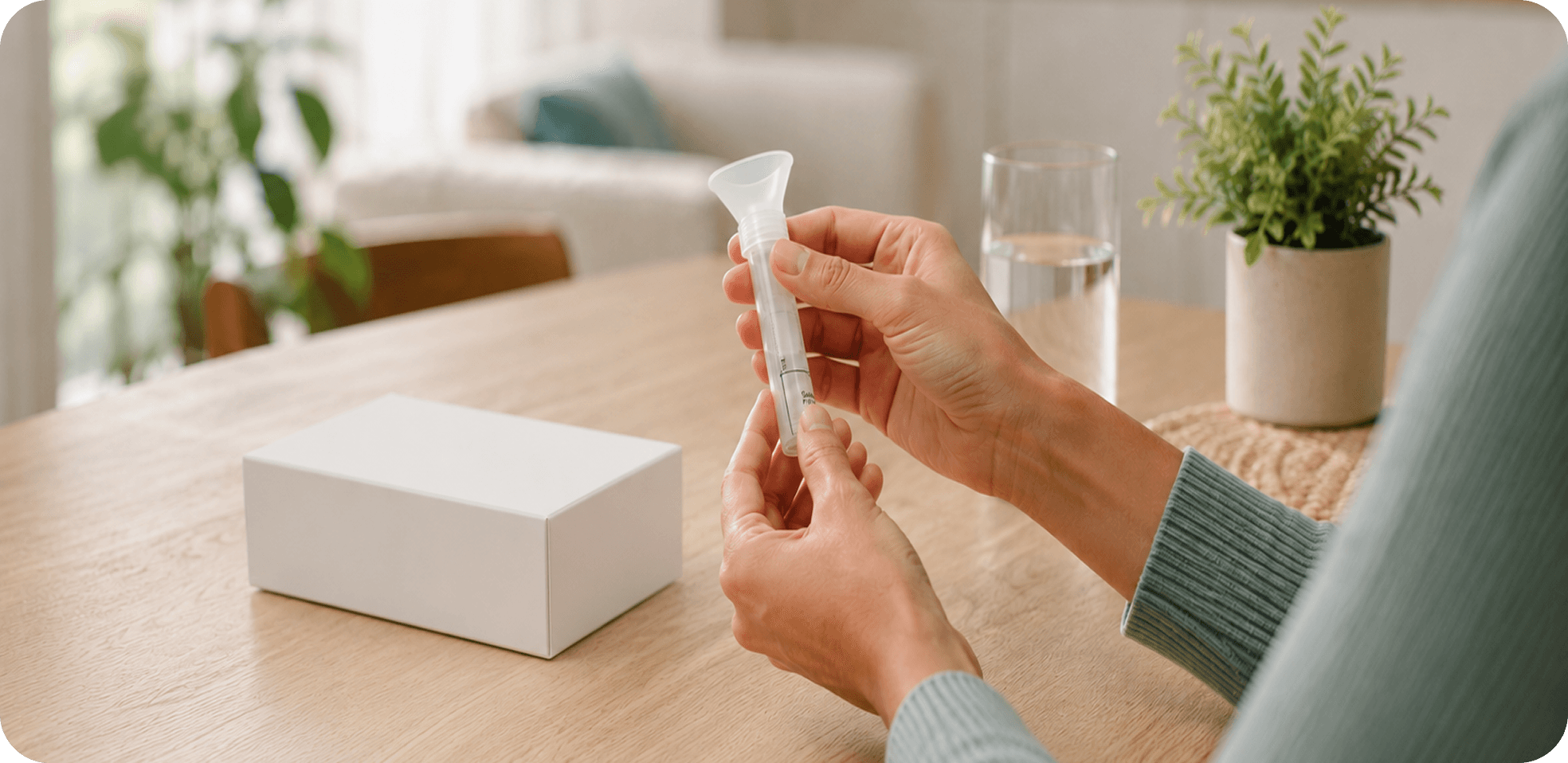
Open the tube. Spit into it. Seal it. That is the entire collection process. You do not need to fast, visit a clinic, or change anything about your day. The instruction card inside the kit walks you through every step. Most women do it first thing in the morning before breakfast.
03

Drop it with the courier

Pre-paid envelope. Pre-labelled. You just hand it over.
Seal the tube inside the pre-paid return envelope included in your kit. A courier picks it up from your address at a time you choose. You can track your sample from the moment it leaves your door in the KYG portal. No post office. No queue.
04

Our lab processes your sample

India's highest certified lab. Every result checked by a scientist.
Your sample goes to Neotech World Lab, which holds India's highest official lab certification (NABL). They use professional gene-reading technology to process your sample. A qualified scientist reviews your specific results before your report is released. It is not automated. A person checks your results.
05

Your report is ready in 7 days

Delivered to your account. Explained by a real person.
Your Women's Health report arrives in your KYG account. Five health checks, each with a plain-language result, a risk level, and a clear action step. Within 2 days of your report being delivered, a GENEous Care counsellor reaches out to schedule your free 30-minute session.
Delivered in 2-3 days · Takes 5 minutes to collect · Results in 7 days
Included free with every report

You will not read this report alone.

GENEous Care is KYG's free counselling service. A real expert reaches out after your results and walks you through everything, on WhatsApp, in plain language, without any medical jargon.

Most genetic testing brands send you a report and a link to a help page. KYG gives you a 30-minute conversation with a qualified counsellor who has read your specific results and can tell you what each one actually means for your life, your health decisions, and your next steps.

What it is

A free 30-minute session with a trained genetic counsellor. Included with every Women's Health report.

How it works

Within 2 days of your report, your counsellor gets in touch over WhatsApp call or video.

What you get

A plain-language explanation of all five results, what each means and when to see a doctor.

"Genetic care, done the GENEous way."
GENEous CareGenetic counsellor · online
Hi! I've read through your Women's Health report. Free to chat for 30 mins this week?
Yes, what does my PCOS result mean for me?
It's a normal-risk result, that's good news. Here's exactly what to keep an eye on for your cycle and weight. I'll explain it all on the call 👍

What your counsellor covers

  • PCOS: what your result means for your cycle, weight management, and fertility planning.
  • Pregnancy: whether your result means you should take any steps before trying to conceive, including specific supplements.
  • Depression: how to prepare emotionally and medically if your result shows higher sensitivity, and what to tell your doctor.
  • Bones: which foods, exercises, and supplements are most important given your specific result.
  • Joints: whether your result warrants early monitoring and what early signs to watch for.
  • Your overall picture: how your five results connect and what to prioritise first.
Backed by science that holds up under the highest scrutiny

Every result is verified. Every report is checked by a scientist.

NABL
ISO 9001:2015
ISO 27001:2013
ACMG
CPIC
HIPAA
FDA
NABL Accredited (ISO 15189) · MC-6400India's highest official certification for testing labs. Your sample is handled under strict, independently verified standards. Not all labs have this.
ISO 9001:2015 + ISO 27001:2013Two international certifications: one for quality management, one for data security. Your personal and genetic data is protected at every step.
ACMG + CPIC GuidelinesYour report follows the guidelines of two of the world's leading bodies in genetic science. The same standards used by top hospitals internationally.
Illumina Genotyping TechnologyThe same gene-reading technology used by the world's largest genetic testing companies. Results are 99%+ accurate.
HIPAA + FDA StandardsYour data is handled under international privacy rules. KYG never sells or shares your information with anyone, ever.
VS
Dr. Varun Sharma, Ph.D · Genetic Scientist
Neotech World Lab Pvt. Ltd., MG Road, Gurugram
Every Women's Health report is personally reviewed by Dr. Sharma's team before it reaches you. Not automated. A trained scientist reads your results.
Accuracy: 99%+ reproducibility. Fewer than 2% of samples ever need rechecking.
Questions women ask before they test

Common questions.

Do I need to be planning a pregnancy to take this test?

No. This test is useful for any woman who wants to understand her hormonal health, fertility, bone strength, and joint health, whether you are planning a family now, later, or not at all. Many women take it simply as an early health check, before marriage, or to understand conditions like PCOS that affect them right now.

I already have PCOS. Is this test still useful for me?

Yes. Knowing your genetic profile helps you and your doctor understand the drivers behind your PCOS and the connected risks it carries, such as type 2 diabetes. It also covers four other areas, pregnancy, post-pregnancy depression, bone strength, and joint health, so you get a fuller picture of your genetic health, not just PCOS.

What does a Poor or High Risk result actually mean?

It means your genes are linked to a higher-than-average risk for that condition, not that you have it or definitely will. It is an early flag that lets you act sooner. Your report tells you exactly what to do, and your free counselling session explains it in plain language.

Can I take this test while I am pregnant?

Yes. The test only needs a saliva sample and is completely safe during pregnancy. Your genes do not change, so the results are valid whenever you take it. If you are already pregnant, the pregnancy and post-pregnancy results can help you and your doctor plan the months ahead.

Is this a medical or diagnostic test?

This is a wellness and risk-screening test, not a diagnostic one. It identifies genetic tendencies and predispositions. It does not diagnose any condition and is not a substitute for professional medical advice. Discuss results with a qualified doctor before making clinical decisions.

Do I need to fast or prepare before collecting my sample?

No. There is no fasting and no preparation. Just avoid eating, drinking, or smoking for about 30 minutes before you collect your sample. The instruction card inside the kit walks you through the simple steps.

Can my partner take the Men’s Health test at the same time?

Yes, and we recommend it for couples planning marriage or a family. The Women's + Men's Health combination is the core of our 'Know Before You Begin' bundle, one saliva kit each and a joint counselling session.

When does the kit arrive and when do I get my results?

Your kit is delivered in 2 to 3 days. Collection takes about 5 minutes at home. Once the lab receives your sample, your report is ready in 7 days and delivered digitally to your KYG account.

What if I have questions after reading my report?

Every report includes a free 30-minute GENEous Care session on WhatsApp. A trained genetic counsellor who has read your specific results explains each one and the exact steps to take. You can ask anything.

Every 1 out of 5 Indian women has PCOS.
Most never learn why. But you can.

Five health checks. One saliva kit. The genetic picture every Indian woman deserves to have.

At-home saliva kit · NABL Certified Lab · Results in 7 days · Free counselling included
Certified lab · 99%+ accuracy · Your data stays private · Free GENEous Care session with every report